
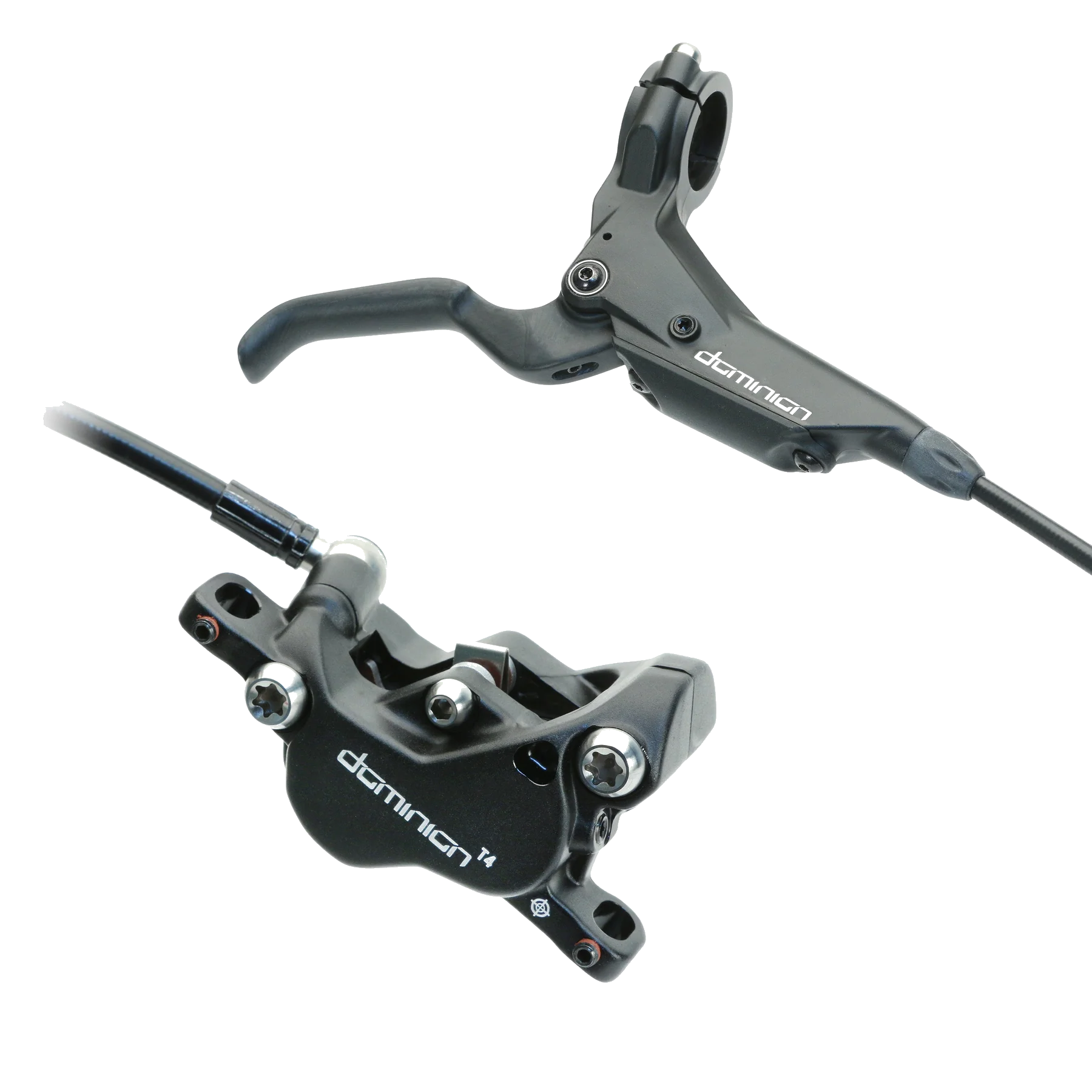
Hayes Dominion T4
Four-piston power in a titanium and carbon premium chassis
Specifications
- Pistons
- 4-piston (Ø17mm)
- Brake Type
- Hydraulic disc
- Hose Connection
- Banjo (Kevlar hose)
- Brake Fluid
- DOT 5.1
- Reach Adjustment
- Toolless knob
- Disk Size
- 160mm, 180mm, 200mm, 203mm, 220mm
- Disk Thickness
- 2.3mm
- Weight
- ~285g per brake
- Features
- Carbon lever, titanium hardware, LOFI, SRL, KingPin bolt, 2-Stroke bleed
- Blade Material
- Carbon (Reynolds)
- Contact Point Adjustment
- No
- Lever Pivot
- Sealed ball bearing
Overview
The limited-edition Dominion T4 merges the Dominion family four-piston stopping power with the ultra-premium construction of the T-series. A Reynolds-designed carbon-fiber lever, titanium hardware, composite reservoir cover, and precision weight-reducing machining deliver a brake that is lighter, stiffer, and more refined than the A4, without sacrificing the Dominion hallmark modulation. The result is a 4-piston enduro brake with a level of feel typically associated with boutique European brands, at a competitive price for the spec level.
Features
Reynolds-designed carbon-fiber lever for premium feel
Titanium hardware and composite reservoir cover
Precision weight-reducing machining
Cold-forged 4-piston caliper with four Ø17mm pistons
LOFI: progressive ramp-up with crisp factory-set bite point
Sealed ball bearings at lever pivot
Stable Rate Link (SRL) — consistent lever ratio regardless of reach
KingPin structural pad retention bolt
Two-Stroke dual port bleed system
DOT 5.1 fluid and Kevlar hose
Compatible with D-Series MRC rotors
Guides for setup
All guidesBrake Bed-in
The essential process for achieving maximum braking power.
Brake Bleeding
System-specific bleed procedures for Shimano, SRAM, and Magura — eliminate lever sponginess and restore full power.
Weather & Conditions Adaptation
Setup adjustments for wet, muddy, dry, and cold conditions — tires, suspension, drivetrain, and brakes.
How we evaluate this component
Product cards, analysis notes, and setup guidance are grounded in public specifications, market positioning, compatibility, and the most likely real-world use cases on trail.
Read the full methodology